


Synthetic Graphite
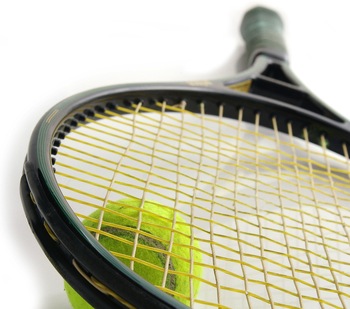
We often hear about graphite but there is often confusion as to what form is used in various applications. Both natural and synthetic forms have their advantages and disadvantages and in many cases, only one form can be used. In some cases, as in Li-ion batteries, either form can work. Synthetic graphite is made from hydrocarbon precursors. Most graphite composites as the ones we find in golf clubs, racquets, aircraft, etc. are produced from organic fibres that have been graphitized. On the other hand, graphite for refractory bricks and crucibles, brake pads and linings, clutches, fuel cells, lubricants and numerous other applications are better suited with natural graphite.
With recent advances in natural graphite purification and modification, inroads are being made where synthetic graphite was once the only choice. Purified natural flake graphite exhibits a much higher crystalline structure than synthetic and is therefore more electrically and thermally conductive. Unlike synthetic, its ability to be exfoliated and then pressed into sheets makes it the preferred structure for heat sinks, fuel cells and gaskets.
Currently, researchers are investigating its use in Li-ion battery anodes due to these more favorable properties, and for the large difference in price. Synthetic graphite for these batteries currently sells for around $20,000 per tonne, whereas spherical graphite made from natural flake, with its superior properties, sells for around $6,000 to 10,000, a huge cost savings and a means of reducing the overall cost of automotive battery systems.
Both forms of graphite will always have their place in the marketplace, but inroads in the Li-ion arena are providing an exciting future for natural flake.